11 March 2026
Enexis frees up capacity: focus on large industrial users avoiding peak periods
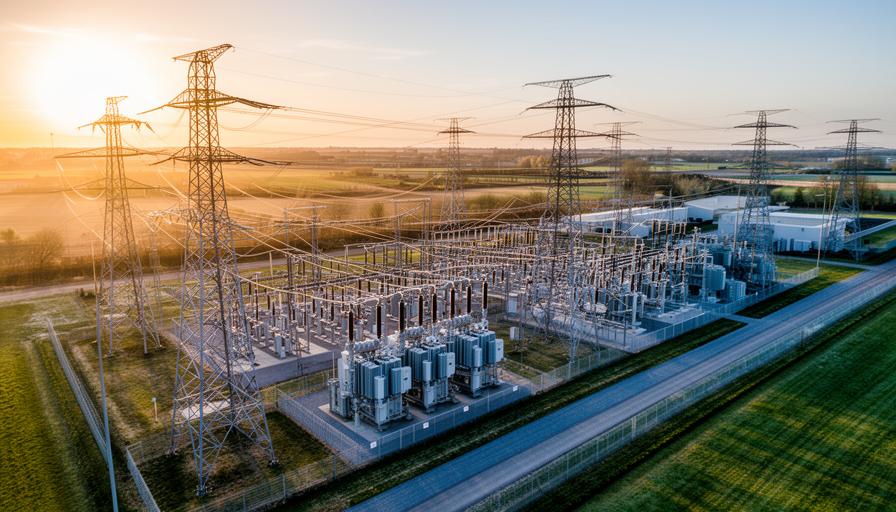
Enexis freed up 542 megawatts of additional electricity grid capacity in 2025 – equivalent to Eindhoven's annual consumption. This offers opportunities for large industrial users, who are often the heaviest electricity consumers, but the main challenge lies in avoiding peak periods.
The grid operator, responsible for networks in Limburg, Brabant, Overijssel, Drenthe and Groningen, invested € 1.9 billion (28% more than before) and delivered 23,000 new connections. Yet 10,000 business customers are now on the waiting list, including many industrial companies. CEO Rutger van der Leeuw warns that large consumers are the most affected, as their processes are difficult to adapt.
Higher grid loading directly benefits industry
Of the 542 megawatts freed up, almost 400 megawatts (80% for companies on the waiting list) came from increasing the load on the 120-year-old grid. "We are squeezing more power out of it without additional outages – the number of outage minutes actually fell," says Van der Leeuw. This helps large industrial users with their high baseline demand, but does not solve peak demand problems.
The challenge for large industrial users: avoiding peak periods
The remaining 166 megawatts was freed up by companies spreading their electricity consumption. Households and small businesses can do this easily with batteries or smart charging points, but it is more complex for large industrial users. "Adapting their production processes often takes three years," Van der Leeuw acknowledges. "That is the real sticking point for these users."
To address this, Enexis is making flexible contracts more attractive. Following criticism from the ACM (in late 2025) over the slow roll-out, it is simplifying the terms. Previously too technical, they are now business-friendly: "We work with you to explore how to shift peak demand in your processes. Often, more turns out to be possible than expected."
Simple contracts for industry
The new pitch: "8710 hours a year at full power, 80 hours at half that level. We manage it remotely and pay you for it." This encourages large industrial users to invest in flexible production without radical changes. Van der Leeuw: "This makes avoiding peak periods attractive and achievable."
What does this mean for your business?
Grid congestion is affecting a growing number of industrial companies. Would you like to know how to make effective use of flexible contracts and avoid peak periods? Contact us for a free consultation.