

28 February 2026
Breakthrough in battery technology: sodium-sulphur as a successor to lithium?
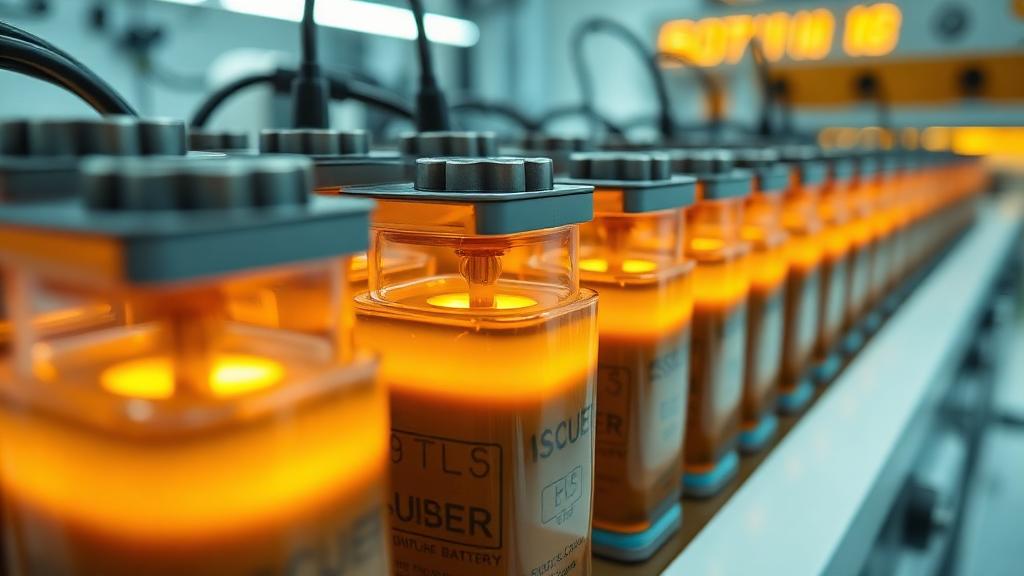
Lithium has been the cornerstone of our portable electronics and electric vehicles for many years. Yet this raw material has serious limitations: it is relatively rare, its extraction places a heavy burden on the environment, and damaged lithium batteries pose a fire risk. Alternatives are therefore being sought worldwide — and sodium is increasingly coming into focus.
Why sodium?
Sodium is abundant in nature and considerably cheaper to extract than lithium. Scientists have been experimenting with sodium-sulphur combinations for energy storage for decades. Until now, the problem has always been the same: the voltage remained too low, or the battery only worked at extremely high temperatures — impractical for everyday use.
The breakthrough
A research team has now developed an innovative electrolyte that allows sulphur to react at room temperature in a way that was previously unachievable. The result: a voltage of 3.6 volts — comparable to conventional lithium cells. Also, the liquid used is non-flammable, significantly improving safety.
Impressive performance
According to the researchers, the new design has an energy density of no less than 1,200 Wh/kg. By comparison, the best lithium batteries reach only around 300 Wh/kg.
The design is also "anode-free", meaning that no separate piece of sodium metal is needed for the negative terminal — a simplification that could further reduce production costs.
Still a long way to go
Despite the promising results, significant obstacles remain. These are still laboratory experiments: scaling up to industrial production is a very different matter. The electrolyte is proving difficult to handle, and the battery degrades rapidly when exposed to air. A market-ready product is therefore still some way off.
Relevance to industry
Nevertheless, this development is relevant to the industrial sector. Cheaper and safer energy storage could fundamentally change the business case for on-site generation and peak shaving.
Would you like to know how battery storage fits into your energy strategy? Contact us for a free discussion.